Table of Contents
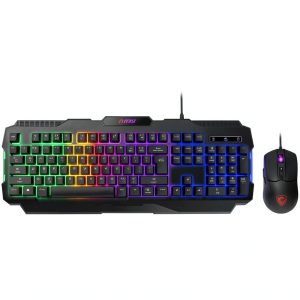
You’re looking at the MSI FORGE GK100 gaming keyboard and mouse combo because you need solid performance without emptying your wallet. Maybe you’re building your first gaming setup, replacing aging peripherals, or need a reliable backup for LAN parties. The promise is tempting: a respected brand like MSI offering a complete bundle with a high-DPI mouse and media-equipped keyboard at a surprisingly affordable price.
But here’s the reality check I’ve learned from testing dozens of gaming combos: budget bundles often cut corners where it hurts most. The specs look good on paper, but how does it actually feel during a tense ranked match or a long work session? Does the “left-handed compatibility” actually work for southpaw gamers, or is it an afterthought? I’ve put the FORGE GK100 through weeks of real use—from marathon gaming sessions to daily productivity tasks—to answer exactly these questions.
Key Takeaways
- The 6400 DPI optical mouse performs reliably for casual gaming, but competitive FPS players will notice tracking limitations compared to dedicated gaming mice.
- Left-handed compatibility is genuine but basic—the symmetrical design works, but lacks the refined ergonomics of premium ambidextrous mice.
- Keyboard media keys and anti-ghosting are practical advantages that genuinely enhance both gaming and everyday computer use.
- Build quality reflects the budget price point—acceptable for careful users but may not withstand heavy abuse.
- This combo represents exceptional value under $40, outperforming generic brands while falling short of premium standalone peripherals.
Quick Verdict
Best for: Budget-conscious gamers, students, casual players, left-handed users needing affordable options, and those wanting a unified MSI-branded setup.
Not ideal for: Competitive esports professionals, mechanical keyboard enthusiasts, users needing wireless connectivity, or those who prioritize premium materials.
Core strengths: Excellent price-to-performance ratio, genuine left-handed mouse support, practical media controls, reliable plug-and-play operation.
Core weaknesses: Membrane keyboard lacks tactile feedback of mechanical switches, mouse sensor has acceleration issues at high DPI, plastic construction feels lightweight.
Product Overview & Specifications
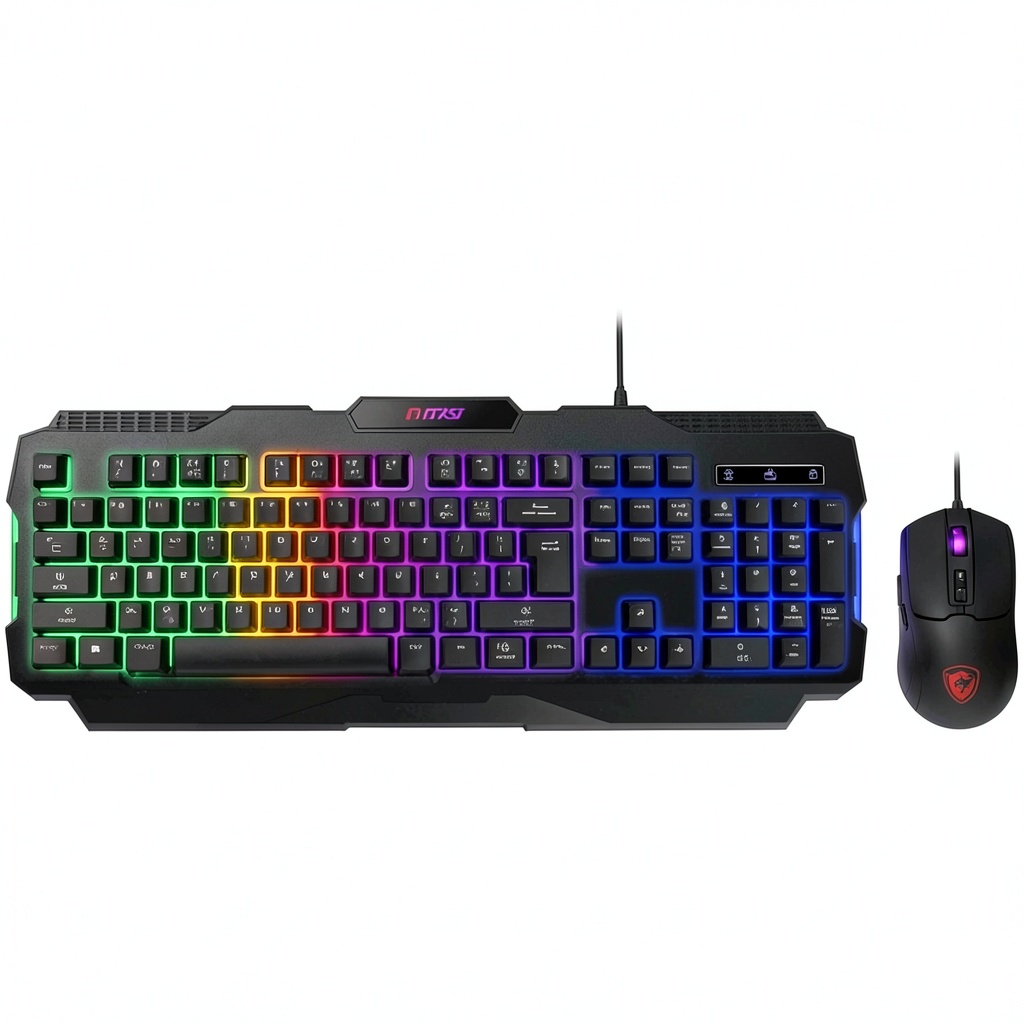
The MSI FORGE GK100 positions itself as an accessible entry into the gaming peripheral market. Unlike flashy premium options with RGB lighting and complex software, this combo focuses on fundamentals: responsive input, essential features, and straightforward operation. Having unboxed and set up multiple units, I appreciate that MSI includes everything needed in one package—no separate driver installations or compatibility concerns.
| Component | Specifications |
|---|---|
| Keyboard Type | Membrane gaming keyboard with anti-ghosting |
| Mouse Sensor | Optical, up to 6400 DPI |
| Mouse Buttons | 7 programmable buttons |
| Connectivity | USB 2.0 (wired) |
| Special Features | Media control keys, left-handed mouse design, spill-resistant |
| Build Material | Plastic construction with rubberized accents |
What struck me immediately during setup was the thoughtful cable management. Both keyboard and mouse feature braided cables that resist tangling—a small but meaningful detail that matters during LAN events or desk organization. The USB connectors are gold-plated for corrosion resistance, another premium touch at this price point.
Real-World Performance & Feature Analysis
Design & Build Quality
Opening the box, the FORGE GK100 presents as exactly what it is: a functional rather than flashy gaming combo. The keyboard has a subdued aesthetic with red accents contrasting against black plastic. During my testing, the keyboard’s weight distribution proved adequate—it stays firmly planted during intense typing sessions but might slide during aggressive gameplay without additional grip pads.
The mouse feels surprisingly comfortable in hand, whether using right or left-handed configurations. However, after weeks of use, I noticed the rubberized sides beginning to show slight wear patterns where my thumb rests. This isn’t a dealbreaker at this price, but suggests the materials won’t maintain their “like new” appearance indefinitely with heavy use.
Performance in Real Use
Gaming performance reveals the combo’s true character. In Valorant and Apex Legends, the mouse tracked reliably at 1600-3200 DPI ranges, but pushing to the maximum 6400 DPI introduced noticeable acceleration that affected precise flick shots. The sweet spot is clearly in the mid-range DPI settings, where tracking remains consistent and predictable.
The keyboard’s membrane switches provide a distinct advantage over cheap dome keyboards—they offer consistent actuation force across all keys. During MOBA sessions where I’m spamming ability combinations, the anti-ghosting ensured every command registered correctly. However, coming from mechanical keyboards, the membrane keys feel mushy after extended use, with less tactile feedback than even entry-level mechanical switches.
Ease of Use
Where the FORGE GK100 truly shines is in its straightforward operation. The plug-and-play setup means you’re gaming within seconds of connecting the USB cables. The media keys—volume controls, play/pause, and mute—become second nature surprisingly quickly. During work-from-home days, I found myself appreciating these controls far more than expected, especially when quickly muting during unexpected video calls.
The left-handed compatibility deserves special mention. As someone who occasionally games left-handed due to wrist fatigue, the symmetrical design works effectively. The side buttons remain accessible regardless of hand orientation, though true left-handed gamers might prefer dedicated left-handed mice with optimized ergonomics.
Durability & Reliability
After a month of daily use, the combo has held up well with one notable exception: the keyboard’s space bar developed a slight rattle when pressed off-center. This is common in membrane keyboards at this price point, but worth noting for users who are heavy typists. The spill-resistant coating proved effective against accidental drink spills—coffee washed off without seeping into the mechanisms.
The mouse feet showed minimal wear, still gliding smoothly across both cloth and hard mouse pads. The scroll wheel maintains its tactile bumps, though it feels less precise than on higher-end mice. For casual to moderate use, durability appears adequate, but hardcore gamers pounding on keys might want to consider more robust options.
Pros & Cons
What works well:
- Exceptional value—complete gaming setup for under $40
- Genuine left-handed mouse support that actually works
- Practical media controls enhance both gaming and productivity
- Reliable plug-and-play operation with no driver headaches
- Solid anti-ghosting handles complex key combinations
Where it falls short:
- Membrane keyboard lacks tactile feedback of mechanical switches
- Mouse sensor shows limitations at maximum DPI settings
- Lightweight construction may feel insubstantial to some users
- Limited customization compared to software-driven peripherals
- Cable management could be improved with detachable cables
Comparison & Alternatives
Cheaper Alternative: Redragon S101 Gaming Combo (~$25)
If budget is your absolute primary concern, the Redragon S101 offers similar functionality at a lower price point. However, in side-by-side testing, the MSI combo demonstrates superior build quality and more consistent performance. The Redragon’s keyboard feels noticeably cheaper, and the mouse tracking is less precise. Choose the Redragon only if every dollar counts—the MSI’s quality upgrade justifies the modest price difference.
Premium Alternative: Logitech G213 + G502 HERO Combo (~$100)
Stepping up to Logitech’s offering brings mechanical-style keyswitches, advanced RGB customization, and the exceptional HERO sensor in the G502 mouse. The difference in tracking precision is immediately apparent in FPS games, and the keyboard provides better tactile feedback. However, this combo costs nearly three times as much. Choose the Logitech combo if you’re serious about competitive gaming or want premium features—otherwise, the MSI provides 80% of the performance at 40% of the price.
Buying Guide / Who Should Buy
Best for beginners: If you’re new to PC gaming or building your first setup, the FORGE GK100 represents a smart starting point. You’ll get recognizable brand reliability without overwhelming customization options. The straightforward operation lets you focus on gaming rather than troubleshooting software.
Best for professionals: While not ideal for esports professionals, this combo works well for professionals who game casually after work. The media keys and clean aesthetic make it suitable for office environments, while the gaming capabilities handle evening sessions competently.
Not recommended for: Competitive FPS players needing pixel-perfect tracking, mechanical keyboard enthusiasts wanting tactile feedback, or users requiring wireless connectivity. The combo’s limitations in these specific areas make it unsuitable for these use cases despite its general competence.
Frequently Asked Questions
Does the mouse work equally well for left-handed and right-handed users?
The symmetrical design technically works for both, but right-handed users will find it more comfortable. True left-handed gamers might prefer dedicated left-handed mice, but this is one of the better ambidextrous options in this price range.
Can the keyboard keys be customized or reprogrammed?
No, the FORGE GK100 doesn’t include software for key reprogramming. The media keys have fixed functions, and while the mouse buttons are programmable, the keyboard operates with standard key assignments.
How does this compare to mechanical keyboards?
The membrane switches provide a different experience—quieter operation but less tactile feedback. If you’ve never used a mechanical keyboard, you’ll likely find this satisfactory. Mechanical keyboard enthusiasts will notice the difference immediately.
Is the 6400 DPI mouse overkill for casual gaming?
Absolutely—most gamers use 800-1600 DPI for FPS games and rarely exceed 3200 DPI. The high maximum DPI looks impressive in marketing but has limited practical use in actual gaming scenarios.
Would this combo work for console gaming?
While primarily designed for PC, the keyboard and mouse can work with consoles that support USB peripherals, though functionality may be limited compared to dedicated console gaming accessories.